
Introduction
[This article was published in September 2025 as a part of our Deaf Awareness Month observations]
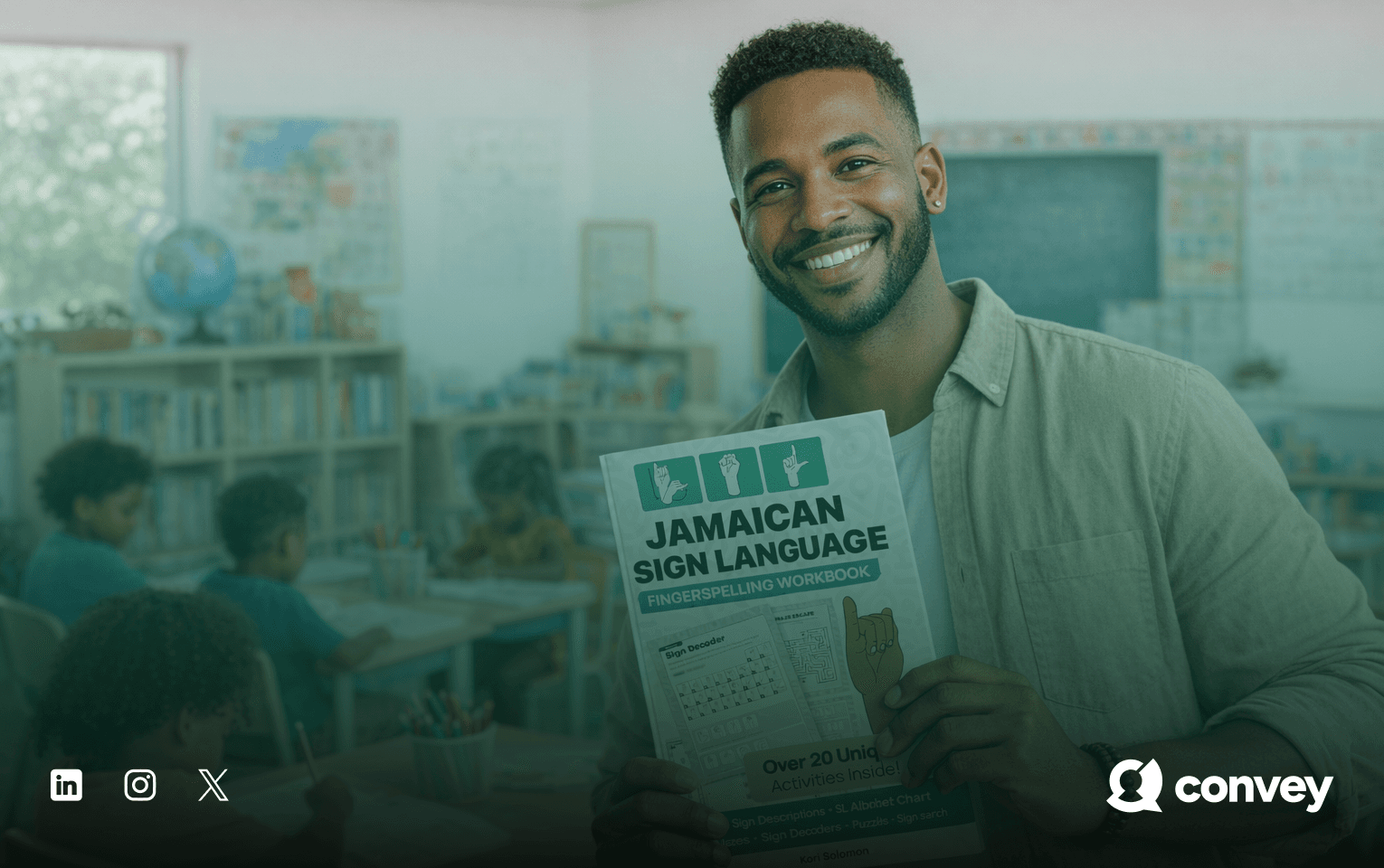
Every September, Deaf Awareness Month reminds us that communication extends beyond words. For the Deaf community, language is not only a tool for everyday connection but it is also a vehicle which proudly represents culture, identity and belonging. Yet, for many hearing Jamaicans, the ability to sign still feels out of reach and oftentimes unnecessary. The JSL Fingerspelling Workbook was created with the hope to change that. We were keen on ensuring that it was more than a well designed resource but that it also functions as a distinct symbol of a well needed bridge.
The Problem Observed
Too often, silence creates separation. Families struggle to connect with Deaf relatives. Teachers want to support Deaf students but lack the adequate resources. Businesses want to serve Deaf customers but don’t know where to start. We noticed a gap: resources for learning Jamaican Sign Language (JSL) were either outdated, scattered, or too advanced for beginners. There wasn’t a clear, structured and inviting entry point.
The result? A growing sense of frustration, isolation and missed opportunities for connection.
Why This Workbook Needed to Exist
The JSL Workbook was born out of a simple but urgent truth: communication is a human right. Everyone deserves to be heard; everyone deserves to be understood and everyone deserves the chance to connect. Unfortunately, we have persons among us who have limited access to the very thing you and I may take for granted oftentimes. This workbook isn’t just about vocabulary or hand shapes but it’s primarily about empowerment. It gives families a way to bond more deeply, classrooms a chance to become more inclusive and workplaces an opportunity to engage Deaf clients with respect and confidence.
Silence should not divide us. It should invite us to listen differently.
Design Approach
From the beginning, the creation process was guided by intentional inclusivity. So, instead of assuming, we asked. Collaborating with schools like Lister Mair Gilby, Caribbean Christian Centre of the Deaf, interacting with Deaf friends and making new ones. The question - "How can we make this workbook welcoming, practical and true to the Deaf culture in Jamaica?' Some design responses included:
- A community-first approach: Engaging Deaf leaders, educators, and students in the early stages.
- Visual-first learning: Strong illustrations paired with clear descriptions, imagery and practice prompts for easy retention.
- • Cultural respect: Ensuring that JSL’s grammar and expressions weren’t "watered down" or replaced with shortcuts.
- User testing: Sharing prototypes of each of the illustrations with the Deaf community members and real learners to refine clarity and usefulness. The workbook is more than a teaching tool. It’s an opportunity for collaboration.
The Impact We Hope For
So, over the next few weeks (and the entire month of September) the Convey team will be leaning into Deaf Awareness Month. Here's what you can look forward to:
- New learning content to be shared from the Jamaican Sign Language Fingerspelling Workbook
- Community spotlights featuring some of the awesome members and friends of the Jamaican Deaf community
- Opportunities for everyday allies to get involved
- The hope is that this initiative becomes more than just a project. We want our resources to become a platform for practice, for learning and for true immersion. The community has so much to say; so much to contribute and we would be delighted to encourage some of those connections.
Deaf Awareness Month is about more than recognition and well timed social media posts. It’s about action. If you have ever wished you could communicate better with the Deaf community, the JSL Fingerspelling Workbook is your invitation and open door. Every sign learnt, is a brick laid on a bridge. Every gesture is a step closer to connection. Together, those bridges and steps bring us toward a Jamaica where no one is left out of the conversation.